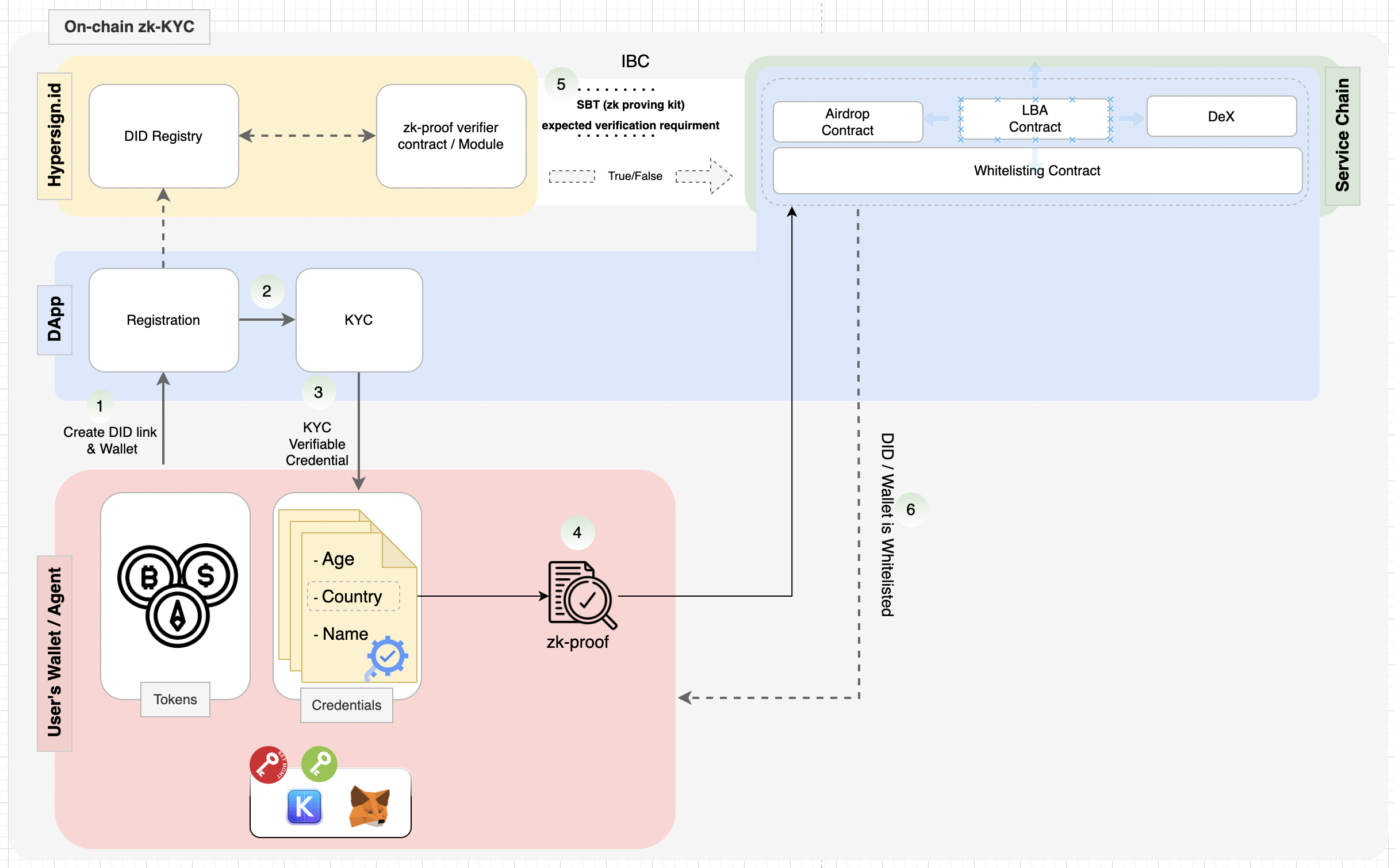
The infrastructure constraints holding back ZK KYC
Zero-Knowledge Proof KYC (ZK-KYC) promises a way to verify compliance without exposing raw personal data, but the infrastructure required to make this work at scale remains heavily constrained. Unlike traditional KYC, where a centralized provider stores and checks documents, ZK-KYC relies on complex cryptographic proofs that must be generated, verified, and integrated into existing financial workflows. This shift moves the bottleneck from data storage to computational verification.
The primary constraint is the cost and latency of proof generation. Creating a zero-knowledge proof for identity attributes—such as proving you are over 18 and reside in the EU—requires significant computational resources. Current proving networks, like the one recently integrated into the XRP Ledger by Boundless, are pioneering native support for these proofs, but widespread adoption is still limited by the speed at which these proofs can be generated and settled on-chain.
Verification is the second major hurdle. While generating proofs is expensive, verifying them is relatively cheap. However, the verifier (often a regulated financial institution) must trust the underlying proving system and the integrity of the initial data source. This creates a dependency chain: if the initial identity provider is compromised or the proving circuit has a bug, the entire verification fails. Infrastructure must therefore be robust, audited, and interoperable with legacy banking systems.
Finally, the lack of standardized protocols complicates integration. Unlike traditional APIs that have clear, universal standards, ZK-KYC implementations vary widely between providers like Sumsub, Veriff, and Trulioo. Each may use different cryptographic primitives or data structures, making it difficult for a single platform to accept ZK proofs from multiple sources. Until the industry converges on common standards for ZK identity credentials, scalability will remain limited by the need for custom integrations for each provider.
Infrastructure tradeoffs for ZK KYC systems
Building a zero-knowledge KYC stack requires balancing privacy guarantees against computational cost and regulatory acceptance. The infrastructure you choose dictates how much data is stored, who holds the keys, and how quickly you can onboard users. Below are the primary architectural models and the concrete tradeoffs involved in each.
On-chain vs. Off-chain Proving
On-chain proving embeds verification logic directly into smart contracts. This offers maximum transparency and eliminates reliance on third-party verifiers, but it is computationally expensive and often limited by block gas limits. It works best for simple boolean checks, such as proving a user is over 18 or holds a specific token balance.
Off-chain proving generates the zero-knowledge proof in a dedicated environment and only submits the proof hash to the blockchain. This is significantly cheaper and faster, allowing for complex attribute verification. However, it introduces a trust assumption: users must trust that the off-chain prover honestly generated the proof without leaking private data.
Trusted Setup vs. Trustless Proving
A trusted setup ceremony involves generating a public parameter set that must remain secret. If the secret key is compromised or never securely destroyed, an attacker can forge proofs. This model is common in older ZK systems but requires careful ceremony management. Trustless proving (or transparent setups) eliminates the need for a secret key, reducing the attack surface but often requiring larger proof sizes and slower verification times on-chain.
Data Storage and PII Handling
Traditional KYC providers store passports and bank statements in centralized databases, creating high-value targets for hackers. ZK KYC infrastructure shifts this by never storing the raw Personal Identifiable Information (PII) on-chain. Instead, the user’s device or a secure enclave generates the proof. The verifier receives only the cryptographic assurance that the data meets compliance criteria, significantly reducing liability and data exposure risks.
Integration Complexity
Implementing ZK proofs requires specialized cryptographic libraries and often custom smart contract integration. This adds development overhead compared to standard API-based KYC checks. Teams must decide whether to build custom proving circuits or integrate with existing ZK-KYC infrastructure providers who handle the heavy lifting of circuit design and proof generation.
| Factor | On-Chain Proving | Off-Chain Proving | Trustless Setup |
|---|---|---|---|
| Cost | High (gas limited) | Low | Medium |
| Privacy | High | Medium-High | High |
| Speed | Slow | Fast | Slow |
| Complexity | High | Medium | High |
Choose the right ZK KYC infrastructure
Selecting a zero-knowledge KYC system requires matching the technology stack to your compliance obligations and user base. The infrastructure choice dictates whether you can scale verification without exposing sensitive personal data.
Evaluate the proving network
The proving network generates the cryptographic proofs that verify identity without revealing the underlying data. Networks like Boundless enable native ZK proof verification on ledgers like XRP, allowing for efficient on-chain validation. Choose a network that supports your specific proof types and offers low latency for real-time compliance checks.
Select the identity provider
You need a trusted source to issue the initial identity credentials. Leading KYC providers such as Sumsub, Veriff, and Trulioo handle document verification and biometric checks. Integrate with a provider that offers global coverage and robust API support to ensure your ZK proofs are based on verified, high-quality data.
Design the data flow
Map how data moves from the user to the verifier. The user should submit documents only to the identity provider, which then issues a credential. The user generates a ZK proof using this credential and submits only the proof to your application. This flow ensures your platform never stores or processes raw personal information, reducing liability.
Test for regulatory compliance
ZK systems must satisfy regulatory requirements like GDPR and AML laws. Verify that your implementation allows for revocation if a credential is compromised and supports audit trails where legally required. Ensure the zero-knowledge protocol does not obscure the ability to identify bad actors when law enforcement requests specific information.


As an Amazon Associate, we may earn from qualifying purchases.
Spotting Weak ZK KYC Claims
Many vendors market ZK KYC as a privacy miracle, but the reality is often a complex trade-off between verification speed and computational cost. When evaluating platforms in 2026, look for concrete proof of their proving infrastructure rather than vague promises. A robust system should clearly articulate how it handles circuit complexity and latency, which are the primary bottlenecks for scalable compliance.
Be wary of solutions that claim zero-knowledge verification without disclosing their proving network. If a provider relies on a single, centralized proving node, they have merely shifted the trust assumption from the data provider to the prover. True decentralization requires a distributed proving network, such as the integration seen on the XRP Ledger with Boundless, to ensure no single point of failure compromises user privacy.
Another common pitfall is confusing traditional KYC aggregation with actual zero-knowledge proofs. Some services simply store encrypted user data and offer "privacy-preserving" access, which does not constitute a cryptographic proof. Ensure the vendor uses actual ZKP circuits to generate attestations for age, jurisdiction, or sanctions status without revealing the underlying personal data. This distinction is critical for maintaining genuine regulatory compliance while protecting user identity.
ZK KYC systems infrastructure: what to check next
Before committing to a zero-knowledge KYC architecture, teams need to clarify how it differs from traditional verification, what the underlying stack requires, and where the market stands.
What is zk KYC?
Zero-Knowledge Proof KYC (ZK-KYC) is a privacy-preserving verification method where a user proves they meet specific regulatory criteria—such as age or jurisdiction—to a verifier without revealing underlying personal data. Instead of uploading a passport, the system generates a cryptographic proof that the document is valid and the user is over 18, leaving the actual image or text hidden from the verifier. This approach minimizes data exposure and reduces liability for both the service provider and the user.
What is zk infrastructure?
Zero-knowledge infrastructure refers to the systems that enable these proofs, allowing one party to prove they know a value without revealing the value itself. In blockchain and compliance contexts, this involves on-chain verification contracts and off-chain proving networks. The infrastructure must handle the computational heavy lifting of generating proofs while ensuring the on-chain verification is lightweight and secure, often relying on trusted setups or decentralized proving networks to maintain scalability.
Does XRP use ZKP?
The XRP Ledger added native support for zero-knowledge proof verification by integrating with Boundless, a ZK proving network. This integration represents one of the first deployments of its kind on a major public ledger, allowing smart contracts on XRPL to verify ZK proofs directly. This move signals a shift toward embedding privacy-preserving compliance tools directly into the protocol layer rather than relying solely on external off-chain solutions.
What are the top 10 KYC companies?
Leading KYC service providers include GBG, Sumsub, Veriff, Trulioo, Entrust, Jumio, Socure, LexisNexis Risk Solutions, and AU10TIX. While these traditional providers offer comprehensive databases and workflow tools, ZK-KYC infrastructure is still emerging. Companies like Treza Labs are building specialized ZK-KYC stacks using confidential computing, but the market is currently split between legacy aggregators and new privacy-focused infrastructure providers. The best option depends on whether you need broad global coverage or specific cryptographic compliance.
No comments yet. Be the first to share your thoughts!