Why ZK KYC Matters for Regulated DeFi
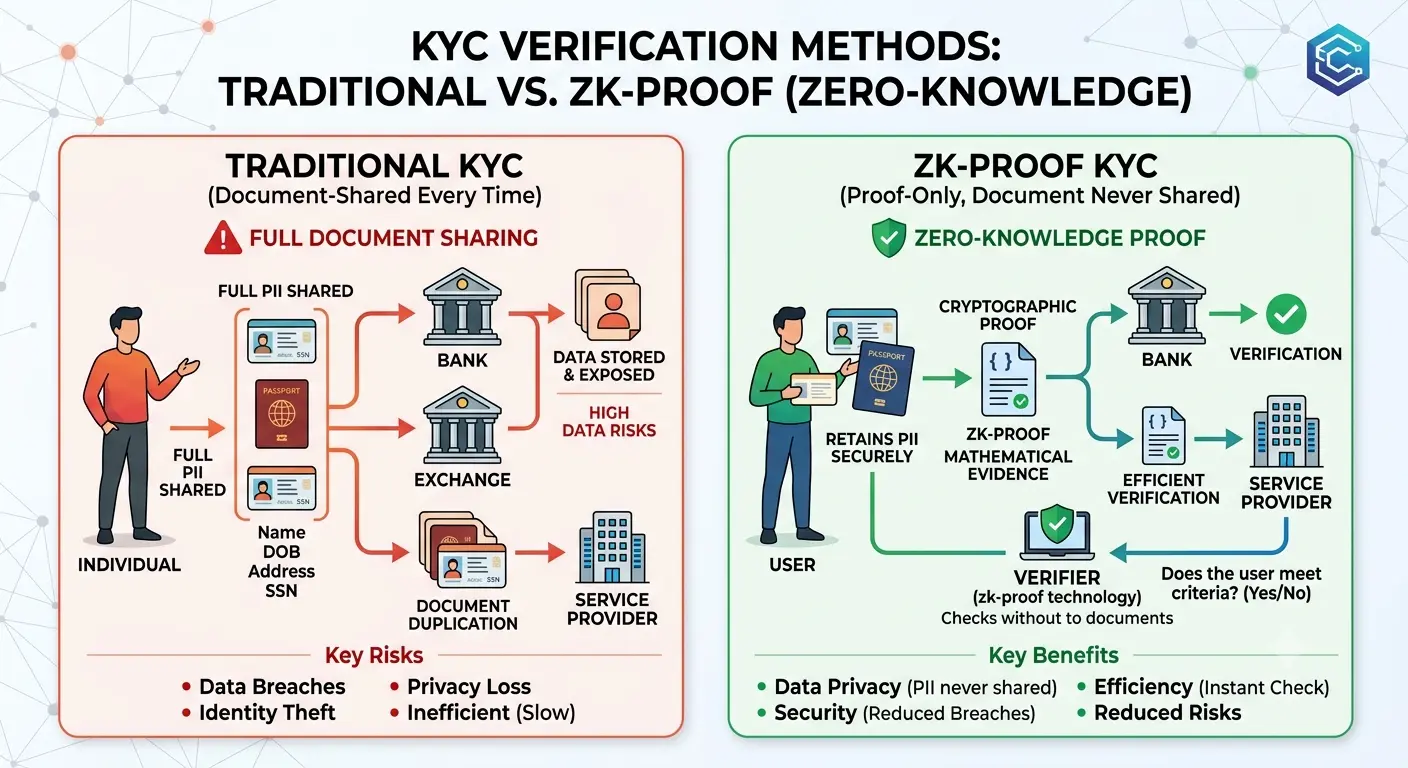
Traditional KYC processes operate on a binary model: you either surrender your entire identity to a centralized server or you remain excluded from regulated markets. This data hoarding creates a single point of failure. When a compliance database is breached, years of sensitive personal information are exposed. For DeFi, which was built on the premise of non-custodial control, this centralization is a fundamental contradiction.
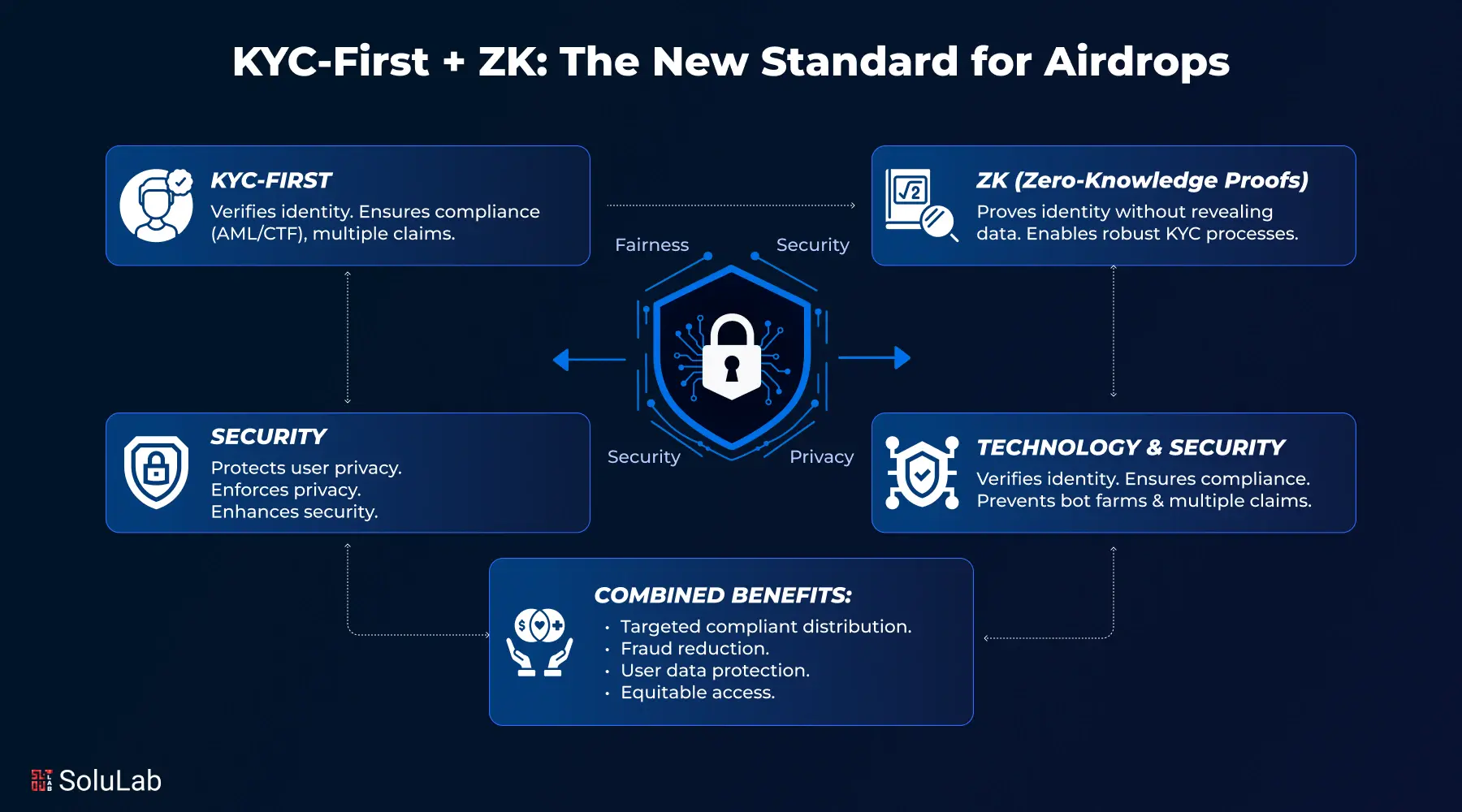
Zero-Knowledge KYC (ZK KYC) resolves this tension by shifting the burden of proof from data storage to cryptographic verification. Instead of uploading a passport and utility bill, a user generates a zero-knowledge proof that mathematically confirms they meet specific criteria—such as being over 18, not on a sanctions list, and residing in an allowed jurisdiction. The protocol receives only a "yes" or "no" verdict, never the underlying personal data.
This architectural shift is critical for high-stakes compliance. It allows regulated DeFi platforms to integrate seamlessly with traditional financial oversight without recreating the fragile, centralized databases that define legacy fintech. By decoupling verification from storage, ZK KYC systems guide the industry toward a model where privacy and compliance are not opposing forces, but complementary technical requirements.
Core ZK KYC Infrastructure Components
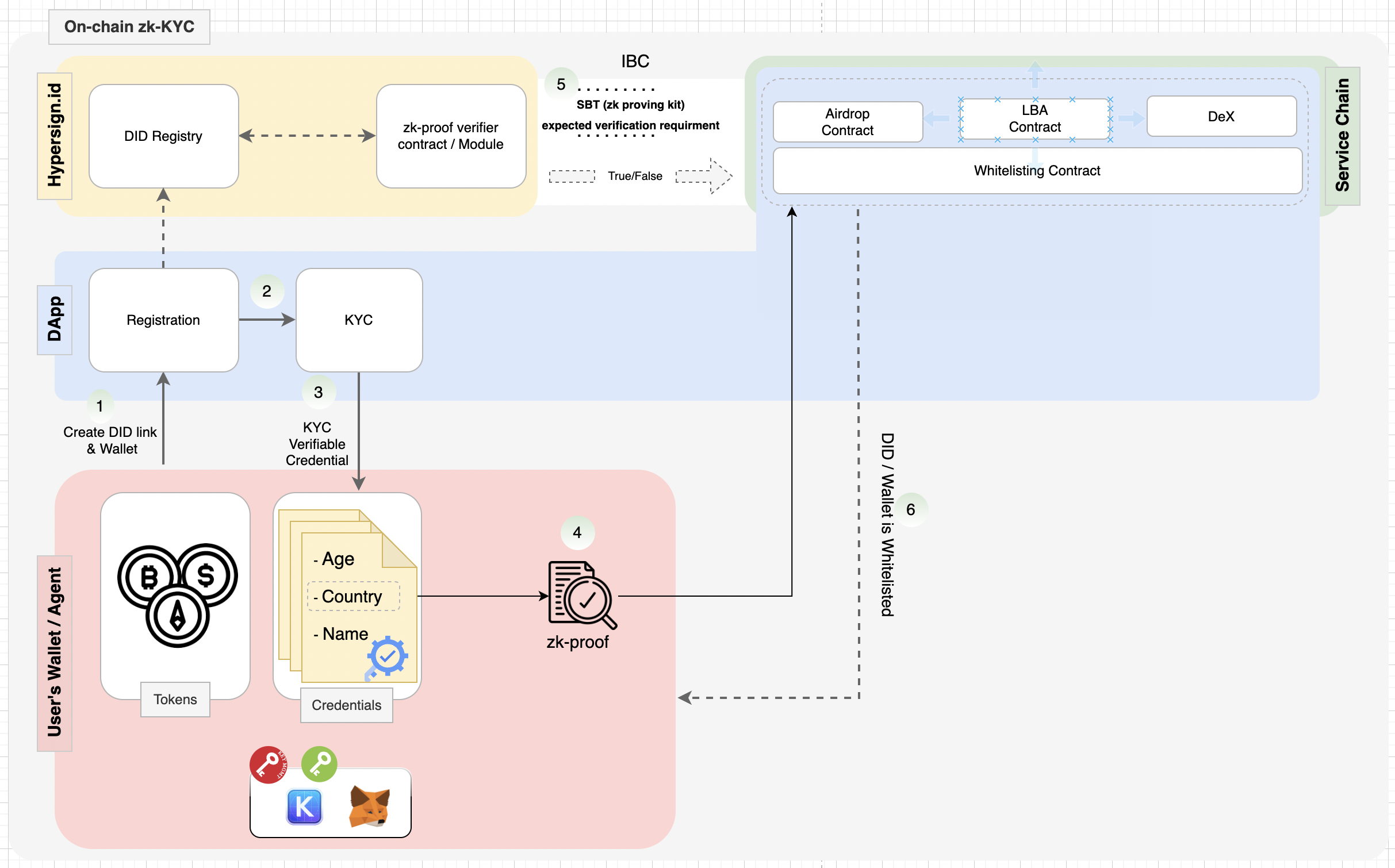
Building a ZK KYC system requires a specific stack that bridges traditional identity verification with zero-knowledge cryptography. The goal is to allow users to prove they meet compliance criteria without exposing their personal data. This infrastructure relies on three main layers: the identity issuer, the zero-knowledge circuit, and the on-chain verifier.
Verifiable Credentials and Issuers
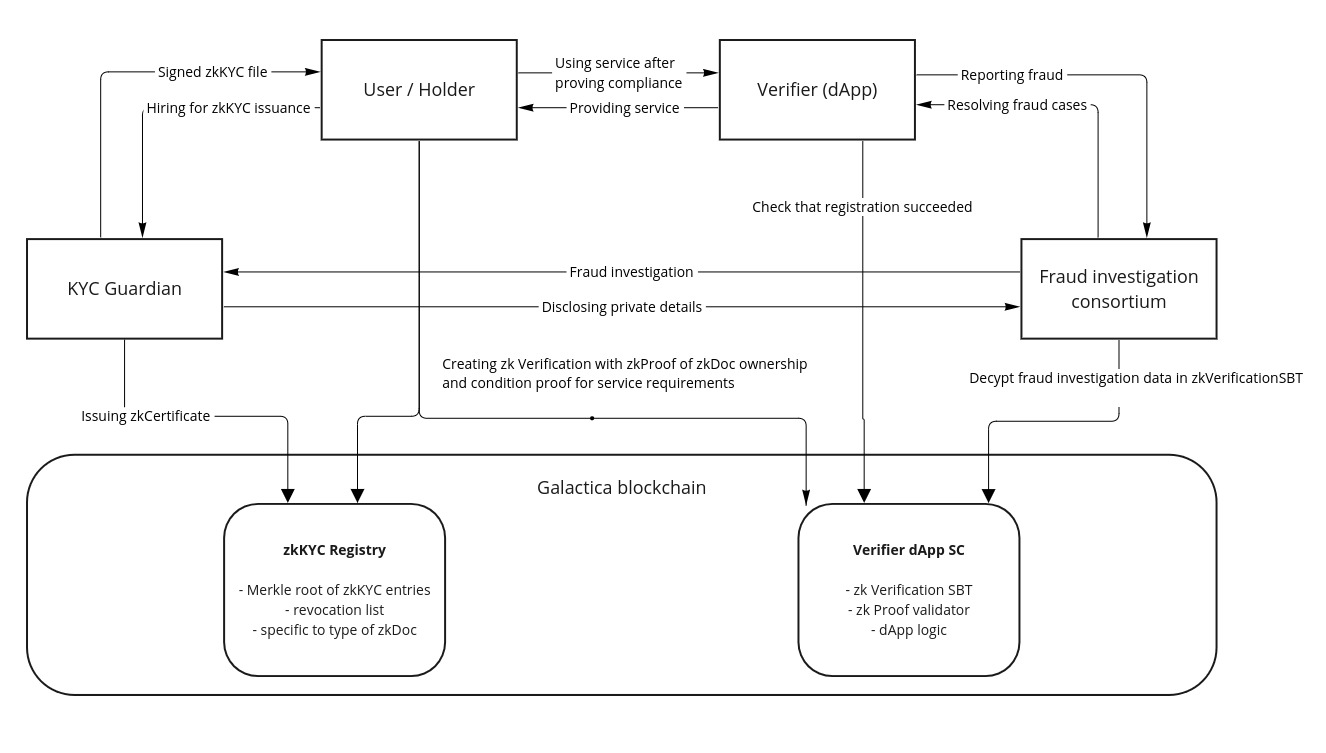
The process begins with a trusted identity provider (IdP), such as a government agency or a vetted bank. Instead of storing raw documents like passports, the IdP issues a Verifiable Credential (VC). This VC is a cryptographically signed JSON object containing specific attributes—like "over 18" or "accredited investor status."
In a ZK KYC context, the VC acts as the source of truth. The user holds this credential in their digital wallet. When they need to access a service, they don't send the whole credential; they use it as input to generate a proof. This keeps the underlying Personally Identifiable Information (PII) private while maintaining the legal validity of the claim.
Zero-Knowledge Circuits
The heart of the system is the zero-knowledge circuit, often built using frameworks like Circom or SnarkJS. This circuit defines the logical rules for what constitutes a valid proof. For example, a circuit might check that a signature from the IdP is valid and that the birthdate in the credential is before a certain cutoff date.
The user runs this circuit locally on their device. It takes their private VC and generates a zk-proof. This proof is a small, complex string of data that mathematically guarantees the statement "I am verified" is true, without revealing any of the inputs. Think of the circuit as a lock: the VC is the key, and the proof is the signal that the key turned correctly.
On-Chain Verification
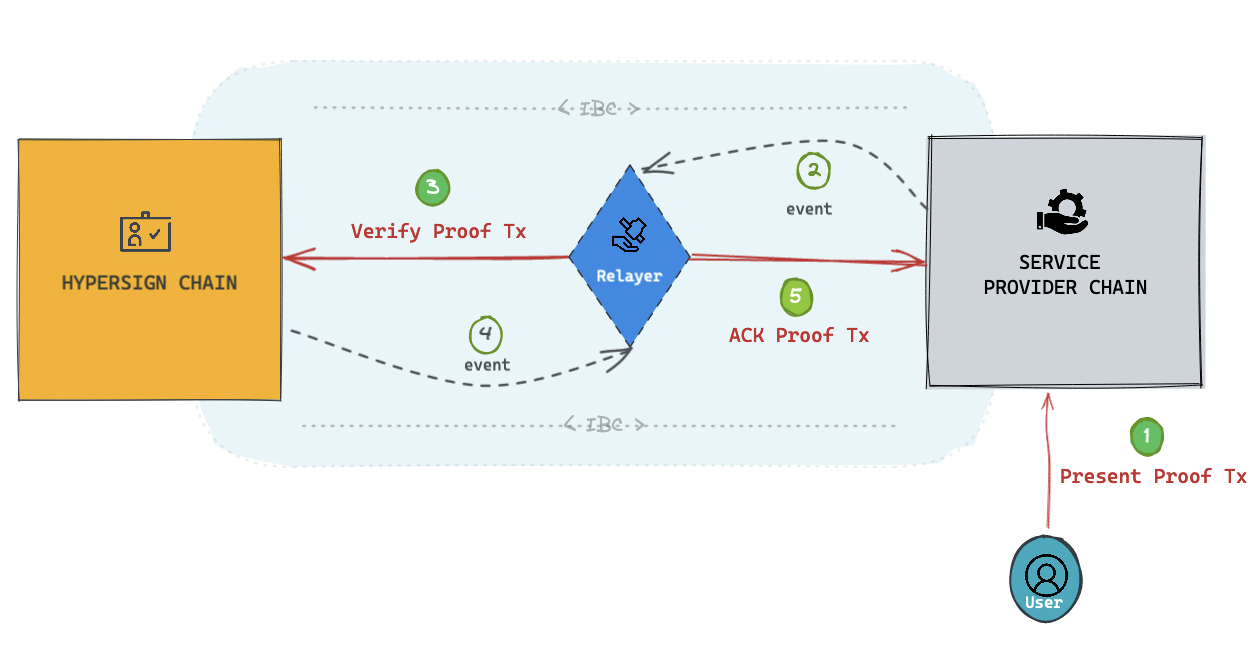
Finally, the zk-proof is submitted to a smart contract on the blockchain. The contract contains the verification key derived from the circuit. It checks the proof against this key. If the math holds, the contract emits an event or updates a state variable indicating the user is compliant.
This architecture means the protocol never sees the user's data. It only sees the proof and the verification result. This separation is what makes ZK KYC systems scalable and privacy-preserving, allowing regulated finance to operate on public ledgers without compromising user anonymity.
Choosing a ZK KYC Implementation Strategy
Selecting the right infrastructure for your ZK KYC Systems guide implementation depends on balancing technical control, compliance velocity, and operational cost. You generally have three paths: building custom zero-knowledge circuits from scratch, integrating with specialized third-party providers, or adopting standardized protocols that have already undergone security audits.
The choice isn't just about code; it's about liability. Custom builds offer maximum privacy guarantees but require deep expertise in SNARK/STARK generation and rigorous security auditing. Third-party providers reduce time-to-market and shift some compliance burdens, but they introduce trust assumptions regarding the provider's key management. Standardized protocols offer a middle ground, leveraging community-vetted standards but requiring careful integration to ensure they meet your specific regulatory jurisdiction.
To help you weigh these options, here is a direct comparison of the primary implementation models.
| Feature | Custom Build | Third-Party Provider | Standardized Protocol |
|---|---|---|---|
| Development Effort | High (months of engineering) | ||
| Development Effort | Low (API integration) | ||
| Development Effort | Medium (integration + config) | ||
| Data Custody | Full user control | Provider holds keys/proofs | Decentralized/Shared |
| Compliance Liability | Full internal responsibility | Shared/Provider-assisted | Community/Standard-based |
| Audit Complexity | Requires full circuit audit | Provider audit reports | Standard audit coverage |
Custom circuits are ideal for institutions with specific regulatory requirements that cannot be met by generic solutions. However, the engineering overhead is significant. Third-party providers are suitable for startups needing rapid deployment, though you must verify their security posture. Standardized protocols are gaining traction for interoperability, allowing different ZK KYC Systems guide components to communicate seamlessly.
Navigating legal and regulatory hurdles
The promise of a ZK KYC Systems guide often collides with the reality of compliance audits. Regulators do not care about the cryptographic elegance of your solution; they care about whether you can prove that a user is who they say they is, without exposing their entire identity. This creates a unique tension: you must satisfy strict Anti-Money Laundering (AML) and Know Your Customer (KYC) mandates while technically preventing the leakage of personally identifiable information (PII).
The regulatory landscape is shifting rapidly. The European Union’s eIDAS 2 framework, for instance, introduces new digital identity wallets that interact with zero-knowledge proofs. Under eIDAS 2, a user can present a cryptographically verified credential without revealing the underlying data fields that are not required for the transaction. This aligns perfectly with the privacy-first ethos of ZK-KYC, but it requires infrastructure that can interpret these new standards. Ignoring these developments risks building a system that is technically sound but legally obsolete.
Proving compliance without revealing data is the core challenge. Traditional KYC involves handing over a passport and a selfie to a central database. ZK-KYC changes this dynamic. You need to demonstrate that the user meets specific criteria—such as being over 18, not on a sanctions list, or holding a valid license—without showing the actual document or birth date. This is where the "proof" in zero-knowledge comes into play. The verifier receives a mathematical proof that the conditions are met, not the data itself.
This approach reduces your liability. By minimizing data storage, you shrink the attack surface for breaches. However, it also complicates audits. Auditors need to verify that the zero-knowledge protocol itself is secure and that the "truth" being proven is accurate. This means your ZK KYC Systems guide must address not just the user experience, but the cryptographic verification layer that regulators will scrutinize. You are building a system where trust is derived from code, but accountability remains with the operator.
Step-by-step ZK KYC integration workflow
Integrating a ZK KYC Systems guide into your protocol requires aligning cryptographic proof generation with existing compliance frameworks. This workflow bridges the gap between traditional identity verification and decentralized finance, ensuring that user data remains private while satisfying regulatory requirements.
Before writing code, determine which regulatory standards apply to your user base. Define the specific claims your ZK KYC Systems guide must prove, such as age verification, residency, or blacklist status. This clarity dictates the complexity of the zero-knowledge circuits you will build.
Connect your platform to a reputable KYC provider that can issue verifiable credentials. Traditional providers hold sensitive documents, creating high-value targets for attackers. Your integration should only request the minimum necessary data to generate the initial credential, reducing your liability exposure.
Develop or configure a zero-knowledge circuit that accepts the user's private identity data and outputs a cryptographic proof. This proof must validate against your protocol's smart contracts without revealing the underlying personal information, ensuring that the ZK KYC Systems guide remains privacy-first.
Deploy on-chain contracts that can efficiently verify the ZK proofs generated by the circuit. These contracts act as the gatekeepers of your platform, checking the validity of the proof against the defined compliance parameters before granting access to restricted features or assets.
Build the frontend interface that guides users through the credential issuance and proof generation process. The experience should be seamless, allowing users to submit their identity once and reuse the resulting ZK KYC proof across different interactions within your ecosystem.
Frequently Asked Questions About ZK KYC
Helpful gear
Use these product recommendations as a starting point, then choose the size, material, and price point that fit how you actually use the gear.



As an Amazon Associate, we may earn from qualifying purchases.
No comments yet. Be the first to share your thoughts!