Why ZK KYC Systems Matter Now
The traditional KYC model is breaking under the weight of its own data hoarding. Service providers are forced to store passports, bank statements, and proof of residence, turning compliance infrastructure into a high-value target for attackers. A single breach doesn't just leak data; it exposes the entire identity of the user base, creating liability that no amount of insurance can fully cover.
Regulatory bodies are finally catching up to this reality. The EU's eIDAS 2 regulation and updated FATF guidelines are pushing for privacy-preserving verification methods that reduce data exposure without sacrificing compliance. This isn't just a technical preference; it's becoming a legal requirement for operating in regulated markets.
Note: The shift toward zero-knowledge proofs aligns with new eIDAS 2 and FATF guidelines, which prioritize privacy-preserving verification to mitigate the risk of mass data breaches.
For institutions, the choice is no longer between compliance and privacy, but between legacy systems that invite liability and ZK KYC systems that verify identity without storing it. As the Web3 industry moves toward full FATF compliance, solutions that combine ZKP technology with regulatory adherence are becoming the only viable path forward.
How ZK KYC Systems Work Under the Hood
Zero-Knowledge KYC (ZK-KYC) replaces the traditional model of storing personal data with a cryptographic proof of eligibility. Instead of a centralized database holding passports and addresses, the system verifies that a user meets specific regulatory criteria without revealing the underlying data. This mechanism allows institutions to maintain compliance while ensuring that Personally Identifiable Information (PII) never touches the blockchain or the service provider’s servers.
Off-Chain Verification and Credential Issuance
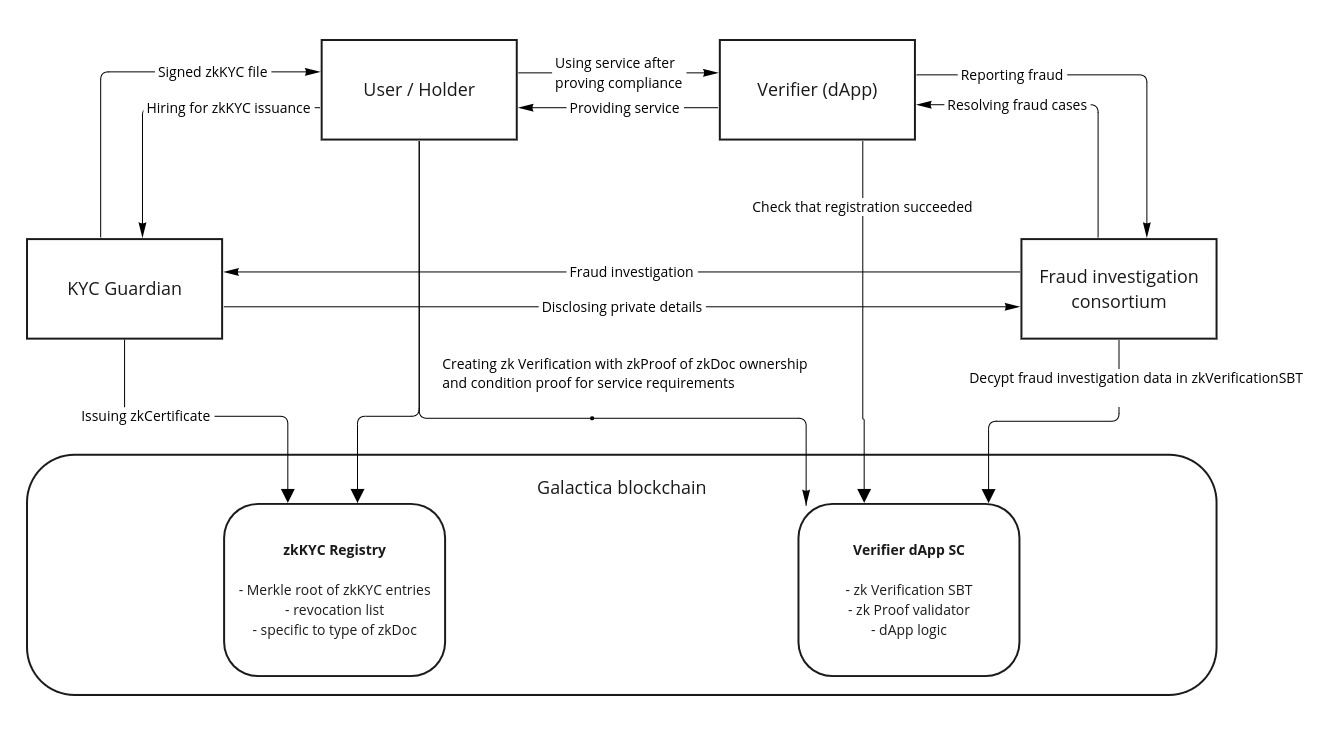
The process begins off-chain. A user submits their identity documents to a trusted verifier, such as a regulated identity provider or a decentralized identity service. The verifier conducts a rigorous check against regulatory standards. Once approved, the verifier issues a signed, verifiable credential to the user’s digital wallet. This credential acts as a digital badge confirming the user’s status—such as being over 18, a verified human, or an accredited investor—without containing the raw personal data itself.
Generating On-Chain Proofs
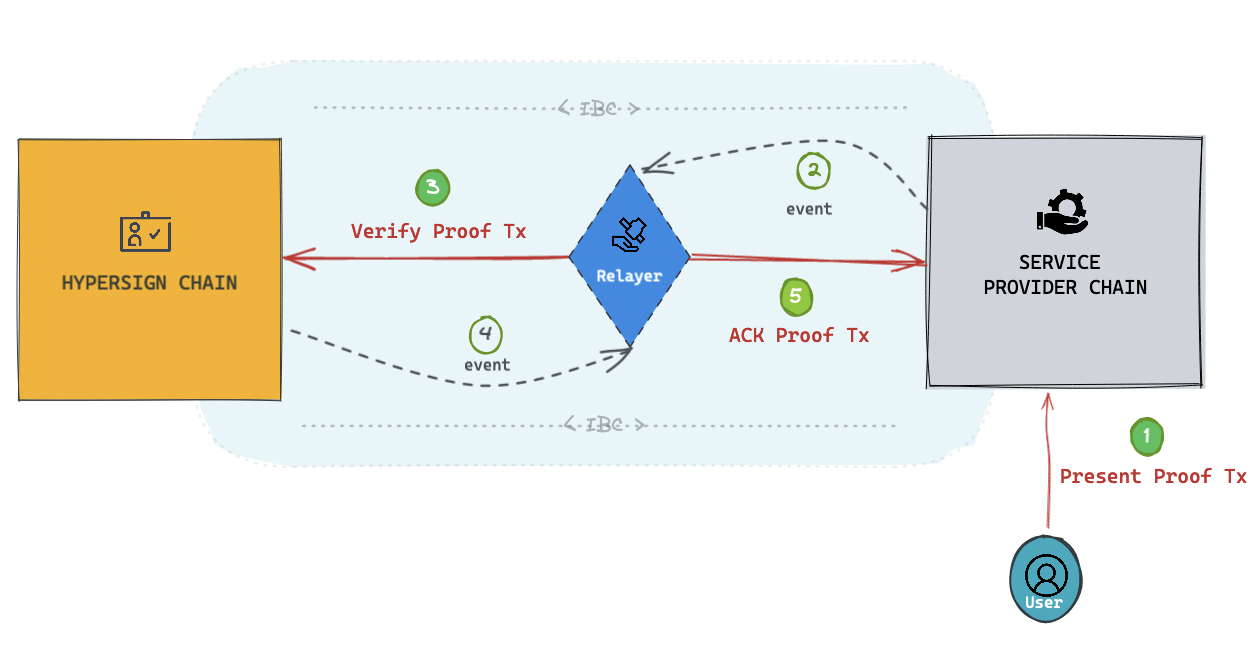
When the user interacts with a compliant platform, they do not upload their documents. Instead, they use a zero-knowledge proof generator to create a cryptographic proof that they possess a valid credential. This proof is then submitted to a smart contract. The contract verifies the proof mathematically, confirming the user’s eligibility without ever seeing the actual identity data. This ensures that the platform can enforce access controls while preserving user privacy.

Why This Matters for Compliance
This architecture solves the critical risk of data breaches. Since PII is never stored on-chain or by the service provider, there is no central honeypot for hackers. Regulators can audit the smart contracts to ensure the proof generation logic meets legal standards, while users retain control over their identity data. This approach aligns with the growing demand for privacy-preserving compliance in decentralized finance.


As an Amazon Associate, we may earn from qualifying purchases.
Leading ZK KYC Systems and Tools in 2026
The landscape for zero-knowledge KYC infrastructure has matured from experimental prototypes to production-grade compliance layers. As regulatory scrutiny around data minimization increases, platforms are differentiating themselves through specific privacy guarantees, integration speed, and jurisdictional alignment. Below are the primary infrastructure providers currently powering privacy-first compliance workflows.
Zyphe
Zyphe focuses on the intersection of regulatory rigor and user experience. Its infrastructure is designed for high-volume verification environments where latency matters. The system utilizes zero-knowledge proofs to validate user credentials without retaining the underlying identity documents, such as passports or bank statements. This "no retention" model significantly reduces the attack surface for data breaches, a critical concern for institutions handling sensitive PII. Zyphe’s architecture emphasizes sub-second verification times, making it suitable for real-time onboarding flows in regulated finance and Web3 applications.
zkPass
zkPass operates as a privacy-preserving verification layer that allows users to prove the validity of information stored in third-party databases without exposing the data itself. Rather than requiring users to upload documents directly to the verifier, zkPass interacts with the source of truth—such as a bank or government registry—to generate a cryptographic proof. This approach is particularly valuable for institutions that need to verify income, residency, or age against external records while maintaining strict data minimization principles. It effectively shifts the burden of storage away from the compliance provider to the verified source.
Treza Labs
Treza Labs provides a ZK-KYC infrastructure specifically engineered for the convergence of traditional finance and crypto assets. Their platform enables the verification of cryptographic claims about a user’s status without collecting the raw Personally Identifiable Information (PII) required by legacy systems. Treza’s solution allows institutions to verify that a user meets specific compliance criteria (e.g., accredited investor status, geographic restriction) while keeping the underlying data encrypted and off-chain. This model supports cross-border compliance by allowing institutions to trust the proof without needing to understand the local regulatory nuances of every jurisdiction.
Holonym
Holonym distinguishes itself by focusing on Sybil resistance and decentralized identity (DID) stacks. While many ZK KYC tools focus on verifying identity documents, Holonym’s infrastructure is optimized for proving unique human status or specific credential ownership in a decentralized manner. It allows users to verify their eligibility using any existing credential while retaining control over their data. This is particularly relevant for decentralized autonomous organizations (DAOs) and Web3 protocols that need to implement "one-person-one-vote" or permissioned access without relying on a centralized identity provider that could become a single point of failure or censorship.
zkMe
zkMe positions its zkKYC solution as a fully decentralized alternative to traditional identity providers, with a strong emphasis on alignment with the Financial Action Task Force (FATF) guidelines. By combining ZK technology with comprehensive compliance frameworks, zkMe aims to bridge the gap between anonymous blockchain interactions and regulated financial activities. Their infrastructure allows for the issuance and verification of credentials that satisfy anti-money laundering (AML) requirements without compromising user privacy. This makes zkMe a preferred choice for institutions operating in jurisdictions with strict FATF travel rule implementations.
Provider Comparison
The following table outlines the core differentiators among these infrastructure providers to help you select the right tool for your compliance needs.
| Provider | Privacy Level | Integration Ease | Target Use Case |
|---|---|---|---|
| Zyphe | No document retention | High (sub-second) | Real-time onboarding |
| zkPass | Source-verified proofs | Medium (API-based) | External data verification |
| Treza Labs | Claim-only verification | High (crypto-native) | Cross-border finance |
| Holonym | Sybil-resistant DID | Medium (DID standards) | Web3/DAO governance |
| zkMe | FATF-aligned ZKP | High (decentralized) | Regulated Web3 services |
Integrating ZK KYC into Compliance Workflows
For compliance teams, the transition to zero-knowledge systems is not just a technical upgrade; it is a fundamental shift in data liability. Traditional KYC requires you to store sensitive identity documents, creating a high-value target for attackers. ZK KYC shifts this model: you verify the proof of compliance, not the raw data itself. This allows you to meet regulatory obligations while drastically reducing your exposure to data breaches.
1. Audit Current Data Flows and Storage
Before selecting a provider, map exactly what identity data you currently hold and where it lives. Most institutions store full passports or utility bills in centralized databases. With ZK KYC, the goal is to move from storing identity to storing only the cryptographic proofs of eligibility. Identify which data points are truly necessary for your risk assessment and which can be offloaded to a decentralized identity provider.
2. Select a Provider with Regulatory Alignment
Not all ZK KYC providers are created equal. Choose a partner whose attestation mechanisms align with your jurisdiction’s requirements. For example, if you operate in the EU, ensure the provider supports standards compatible with eIDAS or local AML directives. The provider must be able to issue verifiable credentials that your internal systems can trust without needing to re-verify the underlying identity documents for every transaction.
3. Test Proof Verification Logic
Implement a sandbox environment to test how your systems handle ZK proofs. You need to verify that your smart contracts or backend services can correctly validate proofs of age, residency, or accreditation without leaking additional information. This step ensures that the cryptographic verification is robust and that false positives or negatives do not disrupt legitimate user access.
4. Monitor Regulatory Changes
Regulatory frameworks for digital identity are evolving rapidly. Establish a feedback loop between your compliance team and technical engineers to monitor changes in AML (Anti-Money Laundering) and CTF (Combating the Financing of Terrorism) regulations. A proof that is valid today may need to be re-issued or updated if a new jurisdiction requires additional data points, such as sanction list screening.
Map existing identity storage to identify high-risk data points. Move from storing raw documents to storing only eligibility proofs.
Choose a partner whose attestation mechanisms align with your jurisdiction’s AML and CTF directives.
Validate proof logic in a sandbox to ensure no information leakage and correct access control.
Establish a feedback loop to update proof requirements as AML and CTF regulations evolve.
Frequently Asked Questions About ZK KYC
How does ZK KYC work?
Using ZK-KYC, a trusted institution issues a verifiable credential directly to a user's wallet. The user then generates a cryptographic proof that they hold this credential, allowing them to enter a permissioned pool without revealing their personal data to other participants. This ensures all liquidity providers are vetted entities while keeping individual identities private from other traders.
Can ZK KYC satisfy regulatory requirements?
Yes, ZK KYC satisfies regulatory requirements by proving compliance status (such as being accredited or located in a permitted jurisdiction) without exposing the underlying PII. Regulators can verify the validity of the zero-knowledge proof against the issuing authority's public key, ensuring the user meets specific legal criteria while maintaining data minimization principles.
What are the main benefits of ZK KYC over traditional KYC?
Traditional KYC requires users to upload sensitive documents to centralized databases, creating privacy risks and data breach liabilities. ZK KYC eliminates this exposure by keeping personal data on the user's device. It also reduces friction for users, who can reuse a single verified credential across multiple platforms without repeatedly submitting sensitive information.
No comments yet. Be the first to share your thoughts!