Why ZK KYC Matters Now
Traditional KYC has become a liability. For years, financial institutions and crypto exchanges have operated as centralized data hoards, collecting sensitive personal information—passports, selfies, and financial histories—and storing it in single points of failure. This model is broken. In 2025, the industry is grappling with the reality that these centralized databases are prime targets for hackers, exposing millions of users to identity theft and fraud.
The risk is no longer just theoretical. Outdated KYC systems have repeatedly failed to protect user data, leading to costly breaches and regulatory fines. When a single database controls all user identity data, the entire ecosystem is vulnerable. This concentration of data creates a massive attack surface that traditional security measures struggle to defend.
Zero-knowledge KYC (ZK KYC) offers a fundamental shift. Instead of storing raw data, ZK systems allow users to prove they meet compliance requirements—such as being over 18 or not on a sanctions list—without revealing the underlying personal details. This separation of duties distributes trust across multiple actors, ensuring that no single entity controls all user identity data.
Note: The shift from data hoarding to data minimization is becoming a regulatory requirement, not just a technical preference. ZK KYC aligns with emerging privacy standards by design.
Regulators are increasingly scrutinizing how institutions handle personal data. The pressure is mounting for solutions that can verify compliance without compromising privacy. ZK KYC provides a path forward that satisfies legal obligations while protecting user data from breach. As the industry matures, the ability to prove identity without exposing it will be the standard for secure, compliant financial infrastructure.
How ZK KYC Architecture Works
Traditional compliance infrastructure relies on a central database. You submit your passport, and the institution stores a copy. If that database is breached, your identity is exposed. Zero-knowledge proof KYC (ZK-KYC) flips this model. Instead of storing the raw data, the system verifies that the data exists and meets specific criteria without ever revealing the data itself.
The architecture separates identity verification from data storage. Think of it as a sealed envelope. You hand the envelope to a verifier who can check if it contains a valid signature, but they cannot read the letter inside. In technical terms, you generate a cryptographic proof that you are over 18, or that you are not on a sanctions list, without revealing your birthdate or name.
This separation of duties is the core innovation. The verifier only receives a boolean result: true or false. They get the predicate, not the personal identifiable information (PII). This means the application never holds your sensitive data, drastically reducing the attack surface for hackers and the liability for the institution.
The process typically involves three steps. First, you provide your credentials to a trusted issuer, such as a government agency or a certified identity provider. Second, you use a zero-knowledge proof generator to create a proof that you meet the required conditions. Third, you submit this proof to the verifier. The verifier checks the proof against the blockchain or their local ledger. If the math holds, access is granted. No data is stored, no history is kept, and no privacy is compromised.
This approach aligns with the principle of data minimization found in regulations like GDPR. You are only sharing what is strictly necessary for compliance. The rest of your identity remains yours. This is not just a technical improvement; it is a fundamental shift in how digital trust is established.
Leading ZK KYC Infrastructure Providers
The market for ZK-KYC infrastructure is no longer theoretical. Several platforms have moved beyond whitepapers to deploy production-grade systems that balance regulatory compliance with user privacy. Understanding how these providers structure their verification pipelines is essential for legal teams evaluating risk and operational teams assessing integration complexity.
The primary differentiation among providers lies in their approach to data retention and verification speed. Some solutions focus on "no-document" verification using decentralized identifiers, while others maintain a hybrid model where sensitive documents are processed in secure enclaves and only the ZK proof is retained. This distinction directly impacts liability and storage costs.
Market Comparison
The table below compares the core operational metrics of three leading infrastructure providers. These metrics reflect current production capabilities as of 2026.
| Provider | Verification Speed | Data Retention Policy | Primary Regulatory Framework |
|---|---|---|---|
| Trezalabs | < 2 seconds | Zero personal data storage | Global Crypto & FinTech |
| Zyphe | Sub-second | No document retention | Banking & Institutional |
| Polygon ID | Variable (L2 dependent) | User-held credentials | Web3 & DAO Governance |
Provider Deep Dive
Trezalabs positions itself as a neutral infrastructure layer for crypto and regulated finance. Their approach emphasizes that applications can verify compliance requirements without ever touching the underlying personal data. This architecture significantly reduces the scope of data breaches, as the service provider acts as a zero-knowledge relay rather than a data vault. Their system is particularly relevant for platforms operating under the EU’s MiCA regulation, where data minimization is a strict legal requirement.
Zyphe focuses on high-throughput institutional verification. By leveraging zero-knowledge proofs in production, they achieve sub-second verification times, which is critical for traditional banking workflows that cannot tolerate the latency often associated with complex cryptographic proofs. Their "no document retention" policy means that once the proof is generated, the source documents are discarded, aligning with strict GDPR and CCPA deletion mandates.
Polygon ID represents a different paradigm: user-centric identity. Rather than a centralized provider holding the verification keys, Polygon ID allows users to hold their own credentials in a digital wallet. This shifts the liability model entirely, giving users control over what data they share. While this offers superior privacy, it requires a higher degree of user education and may face slower adoption in traditional, high-compliance financial sectors where institutions prefer to hold the verification authority.
Regulatory Alignment and Legal Risks
Zero-Knowledge KYC (ZK-KYC) does not exist in a legal vacuum. It operates at the intersection of strict compliance mandates and emerging privacy rights. The system’s primary value proposition—proving compliance without revealing underlying data—aligns directly with the "data minimization" principle embedded in modern regulations like the GDPR and eIDAS 2.0. However, this alignment is not automatic. It requires careful architectural design to ensure that the "zero-knowledge" aspect does not inadvertently violate anti-money laundering (AML) obligations.
The GDPR and Data Minimization
The General Data Protection Regulation (GDPR) mandates that personal data be "adequate, relevant, and limited to what is necessary." Traditional KYC processes often violate this by storing vast amounts of sensitive identity documents (passports, selfies) in centralized databases. ZK-KYC flips this model. By generating a cryptographic proof of eligibility (e.g., "over 18," "not sanctioned") without storing the actual document, ZK-KYC inherently supports GDPR compliance.
This shift reduces the attack surface for data breaches. If a ZK-KYC provider is hacked, the attackers find only useless cryptographic hashes, not customer identities. This separation of duties, as noted by institutional compliance experts, distributes trust across multiple actors, ensuring no single entity controls all user identity data [[src-serp-1]].
eIDAS 2.0 and Qualified Electronic Signatures
The new eIDAS 2.0 regulation introduces the European Digital Identity Wallet (EUDI). ZK-KYC systems are well-positioned to integrate with these wallets. Instead of re-verifying identity from scratch for every service, users can use their EUDI wallet to generate a ZK-proof of their status (e.g., "qualified electronic signature holder") and share that proof with a financial institution. This creates a seamless, privacy-preserving compliance flow that respects both the user’s right to digital sovereignty and the institution’s need for verified identity.
AML Directives and the "Lawful Intercept" Challenge
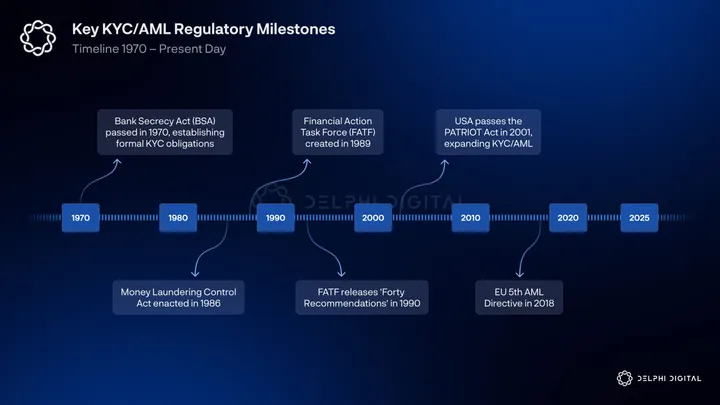
The most significant legal hurdle for ZK-KYC is the tension with AML directives, particularly the EU’s 6AMLD and the US Bank Secrecy Act. These laws require financial institutions to identify the beneficial owners behind transactions. ZK-proofs, by design, hide transaction details. This creates a conflict: how do you prove a transaction is clean if you cannot see who sent it or how much was moved?
This is where the concept of "lawful intercept" becomes critical. Regulators are increasingly demanding that ZK-KYC systems include a mechanism for authorized access to underlying data in specific, high-risk scenarios. This is not a backdoor for general surveillance, but a targeted, auditable process for law enforcement with proper warrants. Without this, ZK-KYC may be deemed non-compliant with AML laws, regardless of its privacy benefits. The system must balance absolute privacy for the majority of users with the ability to "unmask" data for legitimate legal investigations.
Legal Liability and Risk Reduction
The legal risk profile of ZK-KYC is fundamentally different from traditional KYC. In a traditional model, the data custodian is liable for breaches. In a ZK-KYC model, the liability shifts to the integrity of the cryptographic proof and the verification process. If the proof is valid, the user is compliant. If the proof is invalid, the transaction is rejected. This reduces the potential for massive class-action lawsuits related to data leaks, which have plagued traditional financial institutions. However, it introduces new legal questions around the accountability of the ZK-proof generator. If a bug in the ZK-circuit allows a fraudulent proof to pass, who is liable? The protocol developers? The verifier? The user? These questions are still being litigated and regulated, making ZK-KYC a high-stakes, high-reward compliance strategy.
No comments yet. Be the first to share your thoughts!