Zk kyc systems limits to account for
Traditional KYC workflows force a binary choice: hand over your passport and bank statements to a central server, or stay anonymous. Zero-knowledge proof (ZKP) technology breaks this deadlock. It allows a user to prove they meet specific criteria—such as being over 18, not on a sanctions list, or holding a valid credential from a trusted issuer—without revealing the underlying data.
The constraint here is computational overhead. Generating a ZK proof requires significant processing power, which can slow down user onboarding if not optimized. However, recent advances in recursive proofs and hardware acceleration have reduced verification times to sub-second levels, making it viable for high-throughput Web3 applications.
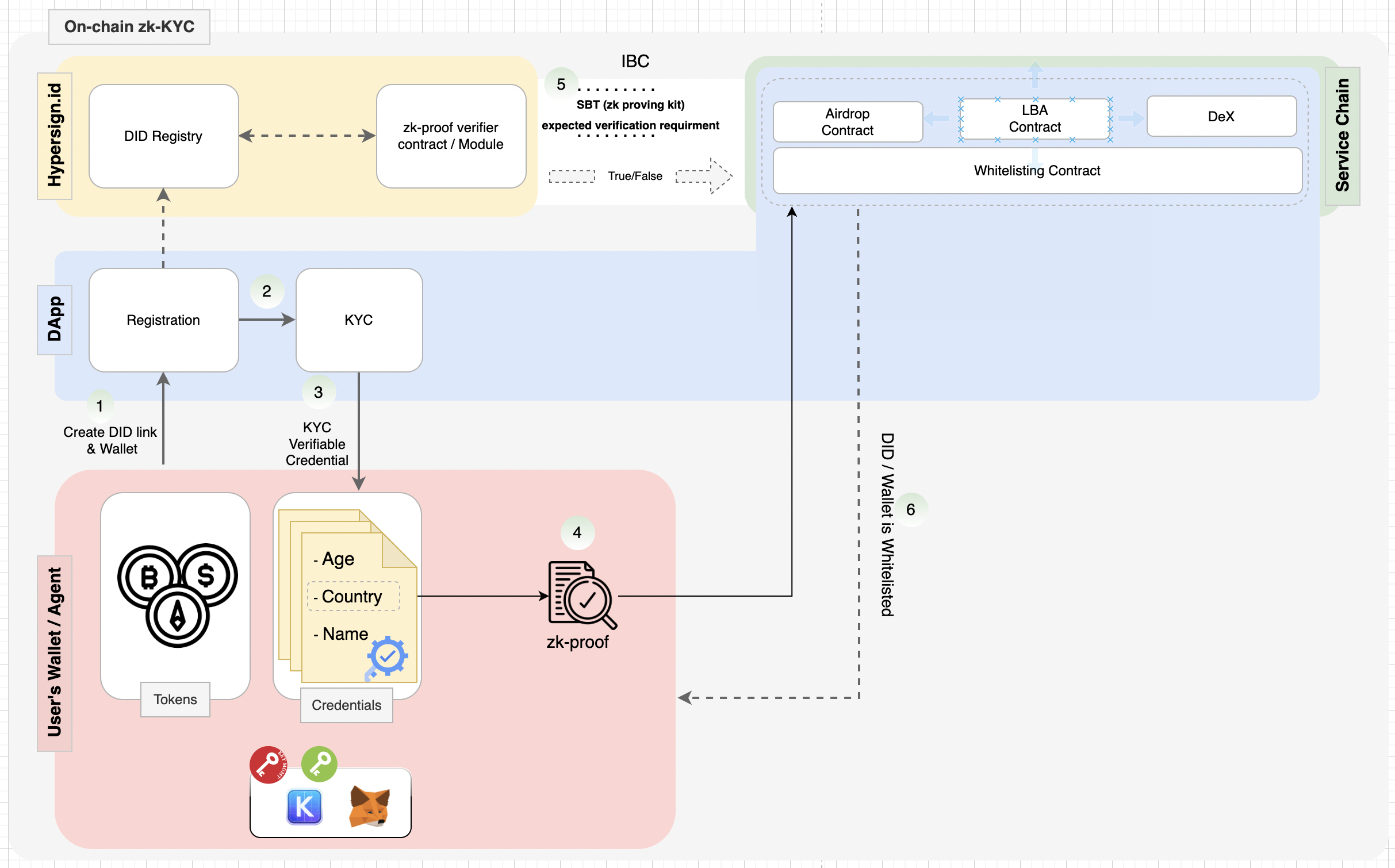
Implementation typically involves three steps. First, a regulated entity verifies the user’s identity and issues a verifiable credential. Second, the user stores this credential in their wallet. Third, when accessing a service, the user generates a zero-knowledge proof that attests to the credential’s validity without exposing the credential itself. This approach minimizes data exposure and reduces the attack surface for identity theft.
The tradeoff lies in complexity. While ZK-KYC offers superior privacy, it requires users to manage cryptographic keys and proofs, which can be a barrier for non-technical audiences. Service providers must balance security with usability, often offering simplified interfaces that handle the cryptographic heavy lifting in the background.
Zk kyc systems choices that change the plan
Building a zero-knowledge KYC infrastructure requires balancing three competing demands: regulatory compliance, user privacy, and operational cost. No single architecture solves all three perfectly. You must choose the tradeoffs that align with your specific risk profile.
The first major decision involves verification granularity. Traditional KYC stores raw documents like passports and bank statements, creating high-value targets for attackers. ZK-KYC shifts this by issuing verifiable credentials to a user’s wallet. The user then generates a proof that they are vetted without revealing their identity to other traders or the application itself [src-3]. This approach reduces data exposure but requires robust credential issuance infrastructure.
The second tradeoff centers on performance versus privacy depth. Proof generation can be computationally expensive. Systems like Zyphe claim sub-second verification performance suitable for high-frequency DeFi interactions, while others may introduce latency that degrades user experience [src-1]. If your platform handles thousands of transactions per second, you cannot afford proof times that exceed user patience thresholds.
The third factor is interoperability. A dedicated identity system serving a separate "Service Chain" allows DeFi applications to operate independently while maintaining compliance standards [src-4]. However, this adds complexity to the stack. You must decide whether to build a bespoke solution or integrate with established providers like Sumsub or Onfido, which offer AI-driven biometric verification but may not fully support ZK protocols [src-serp-2].
| Feature | Traditional KYC | ZK-KYC (Credential-Based) | Hybrid ZK-KYC |
|---|---|---|---|
| Data Storage | Raw documents retained | Zero document retention | Minimal proof data |
| Privacy Level | Low (full identity visible) | High (identity hidden) | Medium (attributes hidden) |
| Verification Speed | Fast (direct check) | Variable (proof generation) | Fast (cached proofs) |
| Compliance Risk | High (data breach liability) | Low (no sensitive data) | Medium (audit trail needed) |
| Feature | Traditional KYC | ZK-KYC (Credential-Based) | Hybrid ZK-KYC |
|---|---|---|---|
| Data Storage | Raw documents retained | Zero document retention | Minimal proof data |
| Privacy Level | Low (full identity visible) | High (identity hidden) | Medium (attributes hidden) |
| Verification Speed | Fast (direct check) | Variable (proof generation) | Fast (cached proofs) |
| Compliance Risk | High (data breach liability) | Low (no sensitive data) | Medium (audit trail needed) |
Market Context
The economic implications of these tradeoffs are significant. Lower data storage costs and reduced liability from breaches can improve long-term unit economics, even if initial proof generation costs are higher. Monitor the market for emerging ZK-KYC solutions that offer competitive pricing models.
Technical Analysis
Understanding market volatility is crucial when pricing ZK-KYC services. Use technical indicators to gauge user adoption trends and adjust pricing strategies accordingly.
Choosing the Right ZK KYC Infrastructure
Building a privacy-preserving identity layer requires matching the technical architecture to your specific compliance needs. The landscape splits into two distinct approaches: on-chain verifiable credentials and off-chain zero-knowledge proofs. Each carries different tradeoffs regarding gas costs, regulatory auditability, and developer complexity.
1. On-Chain Verifiable Credentials
This model issues a signed credential directly to the user's wallet. Smart contracts verify the signature and credential status on-chain. It offers full transparency and easy integration for DeFi protocols but exposes the credential structure to all network participants. Use this when you need simple, low-friction access control without complex proof generation.
2. Off-ZK Proof Generation
Here, a trusted third party or decentralized oracle network generates a zero-knowledge proof off-chain. The user submits only the proof hash to the smart contract. This approach minimizes on-chain data exposure and gas costs but introduces a trust assumption regarding the proof generation service. Ideal for high-throughput applications where privacy is paramount.
3. Hybrid Credential Models
Hybrid systems combine on-chain storage for credential revocation lists with off-chain proof generation for the actual verification. This balances the auditability of on-chain data with the privacy of off-chain computation. It is the current standard for enterprise-grade KYC solutions that must satisfy both regulatory auditors and privacy-conscious users.
4. Decentralized Identity (DID) Integration
Integrating ZK KYC with Decentralized Identifiers (DIDs) allows users to control their own identity data. The user selects which attributes to prove (e.g., age > 18) without revealing the underlying document. This reduces liability for the protocol by shifting data custody to the user. Essential for platforms prioritizing user sovereignty and data minimization.



As an Amazon Associate, we may earn from qualifying purchases.
Common ZK KYC Pitfalls to Avoid
Zero-knowledge KYC promises privacy, but the infrastructure is fragile. Many providers still rely on centralized databases for document storage, creating a single point of failure that defeats the purpose of ZK proofs. If the underlying database is breached, your private key offers no protection against stolen identity documents.
Another frequent mistake is trusting "proofs" that lack cryptographic rigor. Some vendors offer simple hashed data instead of true zero-knowledge arguments, which can be reverse-engineered. Always verify that the system uses standard ZK-SNARKs or STARKs with a trusted setup ceremony that has been publicly audited.
Finally, beware of solutions that claim sub-second verification without explaining the off-chain computation. Heavy cryptographic proofs require significant processing power. If a provider cannot explain how they handle the proving time, the system may be bottlenecked or using weak, easily forged credentials.
Zk kyc systems: what to check next
Zero-knowledge proof KYC solves the privacy-compliance paradox by allowing users to prove they meet specific criteria without revealing the underlying data. This approach shifts the paradigm from document storage to cryptographic verification, addressing the primary concerns of both regulators and users.
No comments yet. Be the first to share your thoughts!