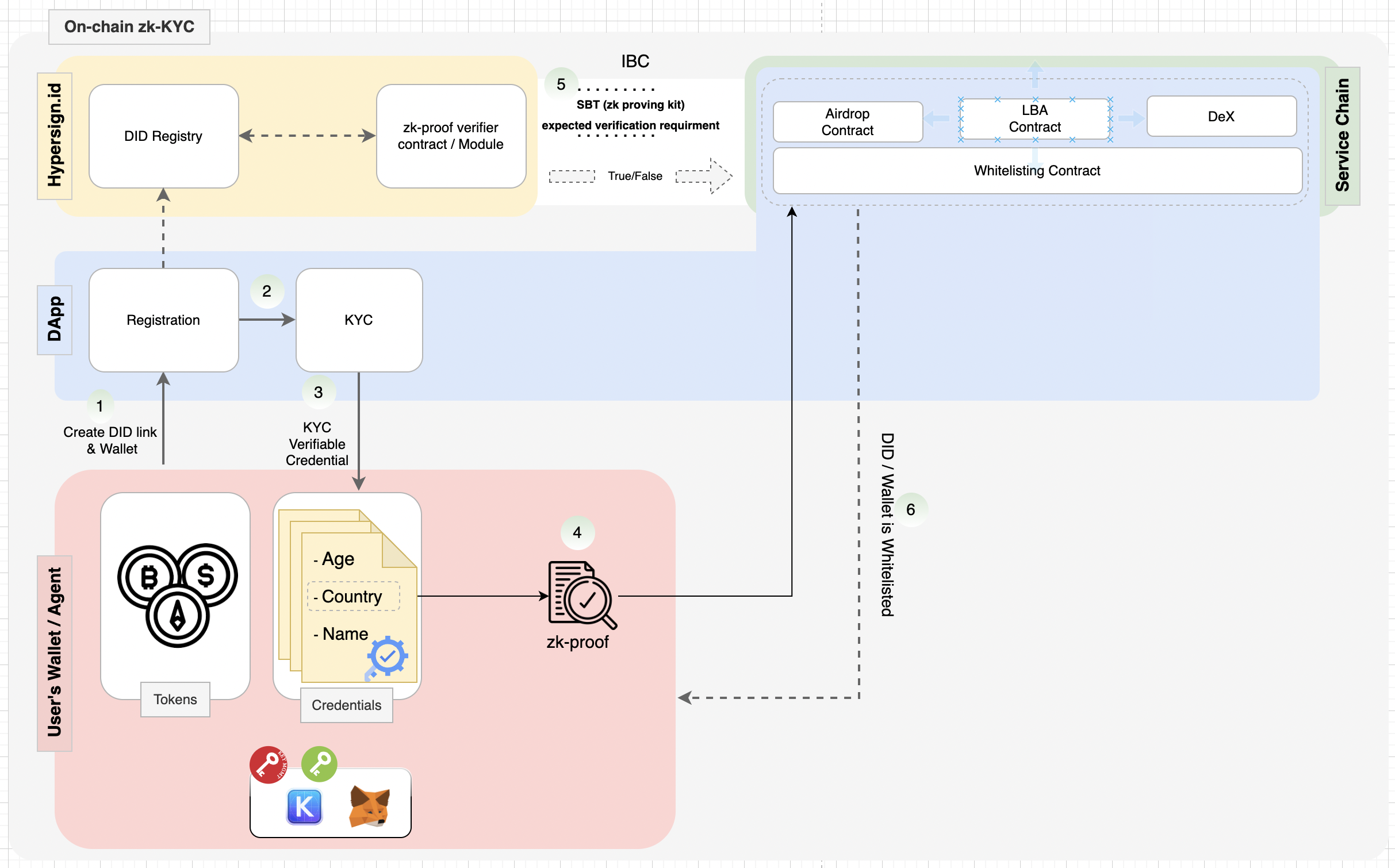
How ZK proofs replace traditional KYC data
Traditional KYC works like a digital filing cabinet: you hand over your passport, utility bill, and selfie, and the institution stores them in a database. This model creates a massive, attractive target for hackers and forces companies to hoard personally identifiable information (PII) long after the initial check is done. Zero-Knowledge Proof KYC (ZK-KYC) flips this script entirely. Instead of sharing the raw data, you generate a cryptographic proof that verifies you meet specific criteria without exposing the underlying details.
In this system, the user interacts with a circuit—a set of logical rules encoded in software. The circuit takes your sensitive documents as private inputs and outputs a "proof" that can be verified by the institution. For example, a predicate might ask, "Is this person over 18 and a resident of the EU?" The ZK proof confirms this statement is true while revealing nothing else. The institution receives a cryptographic guarantee of compliance, not a copy of your identity.
The shift from data storage to data minimization is the core value proposition. You no longer need to trust a third party with your entire digital identity. The verification remains valid, but the attack surface shrinks to near zero. This architecture allows financial services to comply with strict regulations without becoming custodians of sensitive user data, creating a more secure and privacy-respecting verification ecosystem.
Core infrastructure for on-chain verification
A ZK KYC Systems guide must address the technical stack that makes privacy-preserving compliance possible. The architecture relies on three primary components: Decentralized Identifiers (DIDs), Verifiable Credentials (VCs), and zero-knowledge oracles. Together, these elements allow users to prove they meet regulatory requirements without exposing sensitive personal data on-chain.
DIDs provide a unique, cryptographically secure identifier that the user controls. Instead of relying on a central authority to issue usernames or account numbers, DIDs enable self-sovereign identity. This foundational layer ensures that the user owns their digital footprint, a critical requirement for any system aiming to replace traditional, centralized KYC databases.
Verifiable Credentials act as the digital equivalent of physical documents like passports or driver’s licenses. Issued by trusted entities such as banks or government agencies, these credentials contain specific claims about the user. In a ZK KYC context, these VCs are not stored directly on the blockchain. Instead, they serve as the source data from which zero-knowledge proofs are generated, allowing the user to demonstrate eligibility without revealing the underlying credential content.
The bridge between off-chain identity and on-chain verification is often handled by oracles. Protocols like Chainlink DECO enable the creation of zero-knowledge proofs for off-chain data. This technology allows a user to prove that their off-chain VC satisfies certain predicates—such as being over 18 or residing in a specific jurisdiction—without the oracle ever seeing the actual data. This separation is vital for maintaining user privacy while satisfying regulatory audits.
The integration of these components creates a robust framework for institutional compliance. By combining DIDs, VCs, and ZK oracles, financial institutions can verify user identity and regulatory status without storing sensitive personal information. This approach reduces the risk of data breaches and aligns with the growing demand for privacy-centric financial solutions.
Compliance patterns for institutional DeFi
Institutional DeFi demands a compliance model that satisfies regulators without compromising the core promise of decentralization. ZK KYC systems meet this requirement by shifting the burden of proof from identity disclosure to cryptographic verification. Instead of handing over a passport or a bank statement, users generate a zero-knowledge proof that confirms they meet specific criteria, such as age, jurisdiction, or sanctions status.
This approach allows for granular, composable compliance checks. A protocol can verify that a user is over 18 and not located in a sanctioned region without ever learning their name or address. This minimizes the attack surface for data breaches and reduces liability for institutions handling sensitive personal information. As noted in recent research on ZK-based banking services, this method fulfills KYC requirements while significantly reducing privacy risks since full identity disclosure is unnecessary [src-serp-6].
The architecture relies on verifiable credentials and custom circuits to enforce these rules. When a user interacts with a DeFi protocol, the smart contract checks the validity of the ZK proof rather than querying a centralized database. This ensures that compliance is automated, transparent, and resistant to tampering. For institutions, this means they can onboard clients from diverse jurisdictions while maintaining strict adherence to AML/CFT regulations.
To understand the shift in risk profile, consider the difference between traditional KYC and ZK KYC:
| Feature | Traditional KYC | ZK KYC |
|---|---|---|
| Data Exposure | Full PII stored centrally | Only predicates proven |
| Breach Risk | High (centralized target) | Low (no PII stored) |
| Composability | Low (siloed databases) | High (cross-protocol reuse) |
| Regulatory Fit | Standard but rigid | Flexible and auditable |
By using ZK KYC, institutional players can manage the complex landscape of global regulations with greater confidence. The system provides a clear, auditable trail of compliance without exposing the underlying identity data, striking a balance that was previously impossible in decentralized environments.
ZK KYC Systems: Providers and Implementation
Choosing the right ZK KYC infrastructure requires balancing technical constraints with regulatory reality. The market has shifted from generic identity verification to specialized ZK KYC systems that allow users to prove eligibility without exposing underlying data. Providers now offer different approaches to handling verifiable credentials and on-chain predicates, meaning you must select a partner that supports your specific compliance stack.
Selecting the Right Infrastructure
Current ZK KYC providers generally fall into two categories: full-service platforms that handle document ingestion and circuit generation, and modular toolkits that allow developers to build custom circuits. Full-service options reduce time-to-market but may limit flexibility in how you structure your proofs. Modular toolkits offer greater control over the underlying cryptography but require significant engineering resources to maintain secure ZK circuits.
When evaluating providers, prioritize those with published audit reports and clear documentation on supported predicates. The most robust systems allow you to define custom logical conditions—such as "over 18" or "sanctioned list clear"—without requiring the verifier to access the raw identity document. This separation is critical for maintaining user privacy while satisfying regulatory requirements.

Implementation Checklist
Before integrating a ZK KYC provider, ensure your team has addressed the following technical and compliance requirements:
- Audit Status: Verify that the provider’s circuits and smart contracts have undergone independent security audits. Unaudited ZK circuits can contain logical flaws that leak private data.
- Predicate Support: Confirm the provider supports the specific logical predicates you need (e.g., age > 18, residency in specific jurisdictions). Not all providers support complex, multi-condition proofs.
- Gas Efficiency: Evaluate the cost of proof verification on your target chain. Some ZK KYC systems generate lighter proofs for common use cases, reducing on-chain gas costs significantly.
- Verifiable Credential Format: Ensure the provider supports standard formats like W3C Verifiable Credentials or custom schemas compatible with your existing identity infrastructure.
- Revocation Handling: Check how the system handles credential revocation. If a user’s KYC status changes (e.g., they are added to a sanctions list), the system must be able to invalidate previous proofs or issue new ones.
By focusing on these core components, you can build a ZK KYC system that is both compliant and user-friendly, avoiding the pitfalls of early-generation identity solutions.
Key questions on ZK KYC adoption
Regulators often worry about auditability. ZK KYC systems resolve this by using verifiable credentials and specific predicates to prove compliance status without exposing raw identity data. This allows institutions to satisfy due diligence requirements while maintaining user privacy.
Technical overhead is another common concern. While setting up zero-knowledge circuits requires expertise, the verification process itself is lightweight. This efficiency makes ZK proofs practical for high-frequency financial transactions where speed and privacy are both critical.
Helpful gear
Use these product recommendations as a starting point, then choose the size, material, and price point that fit how you actually use the gear.



As an Amazon Associate, we may earn from qualifying purchases.
No comments yet. Be the first to share your thoughts!